
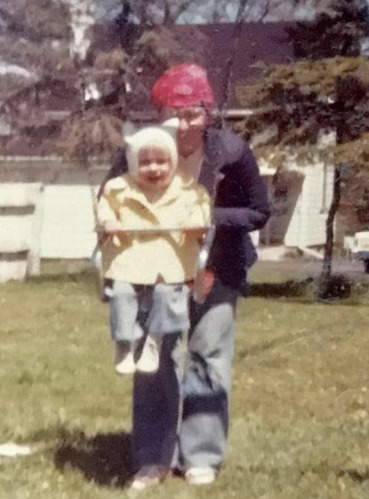
Mother’s Day. Two simple words that can really stir things up. Love. Joy. Adoration. Connection. Gratefulness. Sadness. Heartbreak. Confusion. Hurt. Anger. Loss. Abandonment. Loneliness. The desire for this day to quickly come and go. All of these things can be true under the umbrella of Mother’s Day. They have been for me.
From the age of 8 onward, I was raised primarily by my dad. I saw my mom every other weekend until I was 14. From 14 to 18, I saw her once a week, only for a quick dinner or lunch. Such a routine, when in a broken home in the 80s and 90s, was relatively normal. The abnormal part was that usually it was the dad who left, but my family has always done things differently, I guess. Feelings of sadness or confusion weren’t welcome as it was an era where single parents were struggling with their own well-being, and the kids were to simply go along with the plan, no questions asked. I mean, you could ask the questions but you almost felt punished for doing so, so you quickly learned not to. This may not be a popular opinion and may not be true for everyone, but I think it is actually very accurate for many who lived this kind of childhood during that era.
Despite having a mom who preferred to be on the periphery of my life, I had a close relationship with her when I was a young girl. I was going along with the program, you see. But it was true, my mom and I had a special connection and were very much alike and I really loved her. She felt familiar. She felt like me. She was the only one I felt a deep connection with in my family. She would often laugh and say in a wickedly fun and approving voice how much I was like her, and just how similar we were. I loved it when she talked like that. I felt like we had our own secret club and that this was where I belonged and was most understood. I didn’t feel like that in the house I grew up in where she no longer lived. And so, I do recall some really nice Mother’s Days with her. Mother’s Days where there was Love. Joy. Adoration. Connection. Gratefulness.
This day became much more complicated in my mid to late 20s, and remained that way for most of my adult life. With age, I started questioning her role in my childhood and the decisions she had made to be more of an understudy instead of a main character. This is what happens to some children of divorce. As they become adults, finding their own footing and identities, they start poking holes in how a broken home may have been handled, and well, if you are feisty and challenging like me, this can cause some friction. Inevitably, Mother’s Day started to change. Picking out a card became much more difficult. I remember feeling some anger when going through the racks at the drugstore. I could not relate to the bold pink cursive writing perched on nauseating floral backgrounds that spoke of traditional Norman Rockwell motherly love. Then there were the ‘fun’ cards that joked about the common arguments between a mom and her kids about chores, homework, curfews, sleeping in, messy bedrooms and all of the other ‘normal’ family life routines. These were the only two types of cards that seemed to exist. Neither applied to me. Neither was my reality. Where were the cards for moms that had left you behind, but made sure to have a confusing presence from the sidelines less than a handful of times every month? Where were the cards for those who wanted to be your friend instead of your mom? When there is not a single sentiment that fits your situation and an embarrassing abundance for everyone else, it can make you feel like a true outsider. Different. Isolated. Lonely. Alone. Abandoned. This is most definitely a universal club that you are not a part of. I started buying blank cards.
My mom was diagnosed with Alzheimer’s when I was 37 and she was 67. And so, Mother’s Day changed again. Our relationship had been up and down in my 20s and 30s. Sometimes I was able to find that closeness I had shared with her as a young girl and to embrace our familiarity and similar character; other times, she was truly exasperating — her decision making had not improved with age. However. Alzheimer’s changes everything and you quickly have to accept that you are now on the losing end of lucidity. Once my mom no longer knew who I was or what was going on, I no longer had to confront my confusion, upset and questioning of societal card-buying norms in the drugstore — there was a new emotional assault in town. Heartbreak. Acceptance. Sadness.
My mom died when I was 44. She was 74. She was incredibly ill by then and the last several years of her life were not lived with dignity nor grace – it was truly, truly awful and she was unrecognizable in spirit, mind and body. Her death was an absolute relief. No one should live like that, our pets don’t even suffer this way. It has been my experience that when someone dies, they instantly become young again and we feel closer to them in the way that we used to. We forget about who they were when old and/or sick as that was not them as their true authentic self; we can hear their laugh and their voice again, we can feel their energy and their uniqueness, we can see the twinkle in their eye, we can remember how they made us feel. They come back. I think that is why grief can be so tough — our loved ones return to us as their best selves and no matter how challenging or complicated the hills and valleys were, we remember them for their most beautiful parts. That can bring both immense joy and debilitating grief. And both will visit you, and keep visiting you, forever.
It has now been six years since we lost my mom, but in reality, many more than that. She was gone long before her death. Mother’s Day is now unpredictable for me. Some years I have felt nothing, while other years have left me a bit out of sorts. Listless. Sad. Alone. I could not wait for the day to be over. While I do not miss the trauma of card shopping for a mother that caused great confusion in my heart, social media has become the bigger devil. I do not go on social media on Mother’s Day. I have warned any newcomers to ‘the Club’ to follow my lead. And yes, ‘the Club’ sounds morbid but I tell you, you truly do feel like you are in a club once it happens to you — and please know, I am here for you when your membership becomes active. But yes. Social media for the one without a mother on Mother’s Day (or a father, on Father’s Day) can be very, very tough. Seeing picture after picture of people celebrating their moms at brunch, eating ice cream, having a drink, going to a musical, walking in the park, hugging, smiling … it can be tough for those in ‘the Club’ who don’t really know what to do with themselves on this day, who feel so very outside of this Hallmark holiday. Nor is it an easy day for those looking for that blank card. No one should feel badly about shouting from the rooftops about their beautiful relationships with their moms on Mother’s Day. If the spirit behooves you, you should absolutely do so. You are one of the lucky ones. Just remember that it may not be all mimosas and lipstick-on-the-teeth for others. There is no ‘one size fits all’ experience for Mother’s Day.
This year, some friends and I in ‘the Club’ got together for brunch and a few cocktails. It was just what we needed; some normalcy, some fun, and the relief of spending the afternoon together instead of being alone and somewhat lost. For anyone finding themselves in ‘the Club’, there will be more of this to come. All members are welcome. Stay tuned.
You must be logged in to post a comment.